The Great Southern of Spain Railway
Corrections and updates to my book
This page contains the corrections and updates to my book. You can either just scroll through them or click below to go to a specific year.
Year 2006 Woodhead, Purdon, Gillman, Tesorero, Seron, Cantoria, Albox, Almajalejo, Norias.
Year 2007 Arbuthnot, Boag, Gillman, Marshall pictures, Hornillo, Pulpi accident, Station update.
Year 2008 Civil War, Concessions, Hopper wagons, Restructuring, Micklem, Hannibal, Aguilas.
Year 2009 The Cortina agreement, Debenture payments, Gillman's House, Directors and Chairmen, Station update, Granada Railway Company, Cantoria Tunnel.
Year 2010 August 2010 Floods in Aguilas, High-speed railway, Boag's house, Air Raid Shelter, Gillman Plaque.
Year 2011 The missing plate, Mercer Shunter No 100, Station Update, Boag's House update.
Year 2012 Update on Arboleas, Fines Olula and Albox Stations. Boag's House finished.
Marshall A link to a gallery of 1960s pictures by Lawrence Marshall.
I have been able to obtain archives of some of the missing Reports and accounts for the GSSR. To see them go to the archive link.
I have also found out a fair amount on Col Henry Micklem (page 146). I have put this on a separate page.
Year 2006
Pages 67, 74 and 147 - The middle name of Henry Atwell Purdon is misspelt Attwell. His departure from Águilas was probably because his wife died in 1897 and not for the reason given in the book.
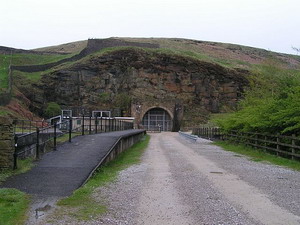
Henry Atwell Purdon was the youngest son of Wellington Purdon, who was the assistant engineer on the infamous Woodhead tunnel project (pictured). This 1840s project cost so many lives that a social reformer, Edwin Chadwick reported that injury and loss of life was comparable to major battles of the time. Wellington Purdon was indifferent to this loss. When at an enquiry he was asked why he did not use patent fuses for blasting - werent they safer? He replied,
Perhaps they are - but they are attended with such a loss of time, and the difference is so very small that I would not recommend the loss of time for the sake of all the lives it would save
He also refused to buy copper rammers instead of iron ones that sparked and caused several explosions.
Page 103 - The mound that was the loading bay for Tesorero mine does still exist.
Page 194 - e missing from "swingeing"
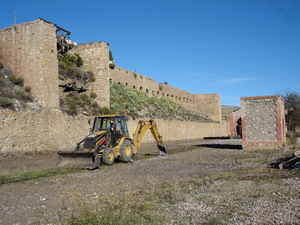
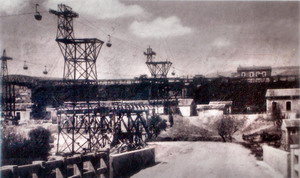
Page 104 Seron - There seems to be some activity towards clearing the space. Everything is still there, but for how much longer? On the notice-board advertising what they are going to do with the area is this picture showing the ore arriving at Seron. The hoppers can be seen at the rear.
Page 111 Purchena - I give it 2 years at the most. It is in a very sorry state and is not really safe to go inside any more. If you do go just to look at it, the instructions in the book still hold but take great care, the road is very fast and busy. You may want to use the garage forecourt to orientate yourself.
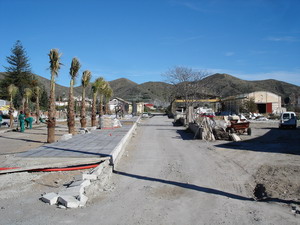
Page 113 Cantoria - The area shown in the photo (which used to be the line and sidings) is being turned into a park, while the station itself is now a local development office which is encouraging.
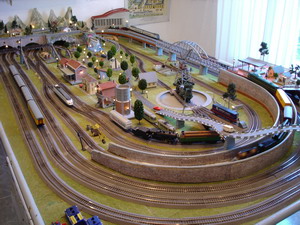
Page 114 Albox (Almanzora) - House is now re-occupied and done up. The house opposite houses a small private museum. The proprietor is keen to show it off, so give him a call.
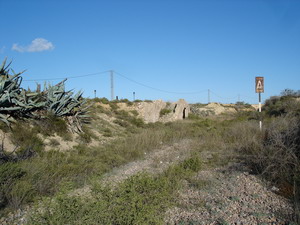
Page 116 Almajalejo - The station has been demolished and only the steps leading down to the platform remain. It looks as though a house is going to be built on the land.
Page 119 Las Norias - The station has been demolished.
Pages 146 and 147 - Popkins should be Popkiss.
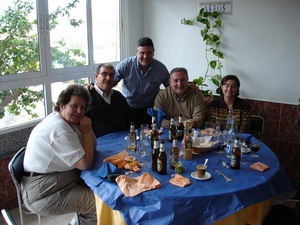
Page 148 John Gillman - In December 2006 I had the pleasure of meeting Juan Gillman (second right), the grandson of John. He told me that not only did John only manage the line for a few weeks he was arrested as Management by the Republicans and was sentenced to death. It was only with the intervention of the British Ambassador and friend in the Cortes, that he was able to get away to Gibraltar where he stayed until the end of the war. Since Franco won, he was then able to stay in Spain.
Year 2007
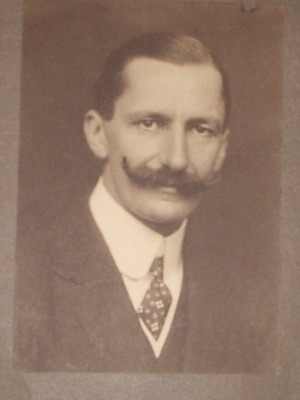
Page 146 W R Arbuthnot - William Reierson Arbuthnot, was born in India 1866. Died 1938. He was a parner at Arbuthnot Latham and Co, a private bank, 1903-38; Chairman, Standard Bank of South Africa Ltd and Estates and Agency Co Ltd; Director, Consolidated Sisal Estates of East Africa Ltd. Director The Great Southern of Spain Railway Co Ltd 1901 - 1910. (Information gathered from the Arbuthnot family web site)
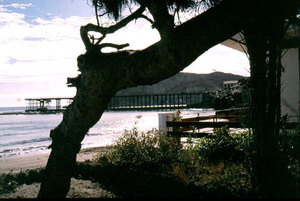
Pages 44, 132 and 186, El Hornillo My book describes the history of the loading area but does not show clearly how it worked. I hope that the link below will help.
Operation and pictures of El Hornillo
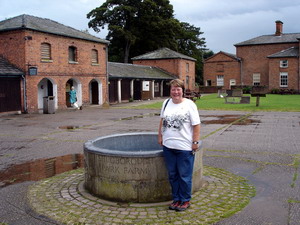
Page 148 George L Boag On the left is Alison Mathison, the great niece of George. I had the pleasure of meeting her and her husband this summer at Shugborough Hall in Staffordshire. With us was Antonio Moreno (Page ii) and his family. Alison has a fund of information about her "Uncle George" which will appear in a book that Antonio is writing about the people at Águilas.
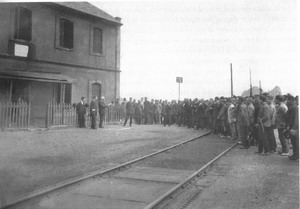
George L Boag and Gustave Gillman continued This picture, taken in 1923, shows Boag (centre of the group of three) attending the unveiling of a plaque commemorating the work of Gillman, who had died in Brasil the year before. The picture was taken in front of the Hornillo offices (compare with the building today) The plaque is in the centre of the building under a window. The drawn-back curtains on the plaque can clearly be seen.
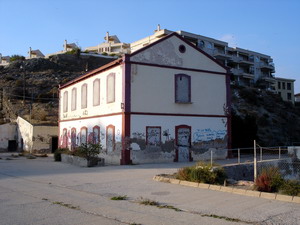
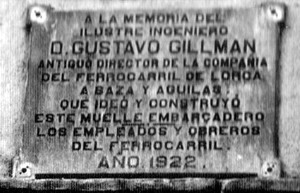
This is the plaque in detail. It says "To the memory of the illustrious engineer Don Gustavo Gillman, past director of the Lorca to Baza and Águilas Railway, who thought of and built this pier and loading bay. The employees and workers of the railway 1922"
Page vii Acknowledgements Marshall should have two ls
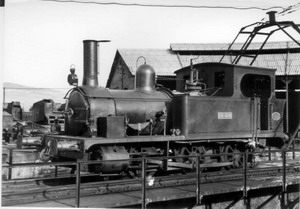
Page 35 Rolling Stock In the 1960s Lawrence Marshall took some pictures of steam engines on the Lorca-Baza-Aguilas line. Although this was well past the GSSR days, the engines were still the same. Lawrence has kindly given me permission to show these pictures here. Steam on the LBA. If you are interested in more of these, Lawrence has published several, with wonderful pictures, including "RENFE Steam Remembered" and "Spanish Narrow Gauge Steam remembered". Contact me by email on my home page and I will put you in touch.
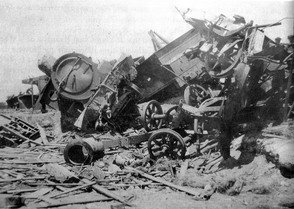
Page 82 Accident at Pulpi This accident was considered the worst in the line's history and caused great distress in the region. Antonio Moreno (mentioned above) plans to write a detailed history of the accident. A much happier event occurred in September 2007 when Pulpi made a bid in the Guinness book of records for the biggest salad in the world!
Update on Stations December 2007
| STATION | CONDITION | PICTURE |
| Águilas | The old marshalling yards are now being covered with buildings and little sign now remains of them. Something is happening to the Hornillo pier, but I am not sure what. The track bed up to the hoppers has been cleaned up, but so far the hoppers themselves are untouched. The gates leading to the pier have again been securely locked. | 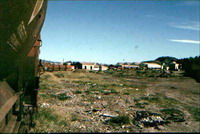 |
| Zurgena | There has been some care taken to smarten up the area. The buildings have been renovated and the old platform areas planted with shrubs. The weighbridge building still has the scales inside. The marble works are now a big concern but the old gates can just be made out through the undergrowth. The rear area is being turned into a children's zoo and petting area, there are a couple of donkeys but it is not open yet. |  |
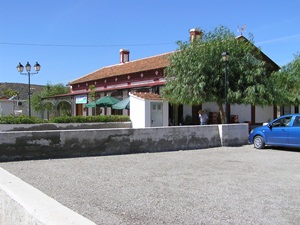
| Albox (Almanzora) | Yet another change for this station. It has now been turned into a nice cafe and meeting place for retired people. | 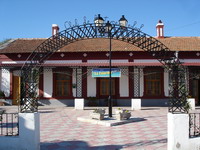 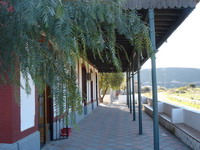 |
| Cantoria | The station area has been turned into an attractive office park and gardens. The station building appears to be an employment office and there is a music school in one of the other buildings. The area that was once the track and marble sidings (see album 1 and page 114) is now a little park. | 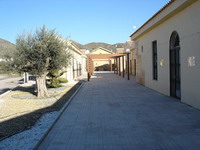 |
| Purchena | This is in a very sad state and cannot last much longer | 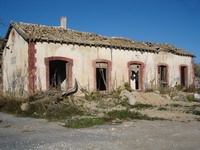 |
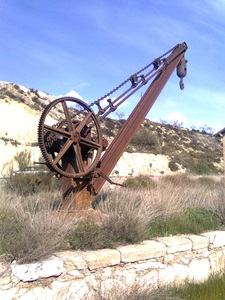
| Fines Olula | The Hurcal-Overa to Baza road is being turned into a dual carriageway. As a result, much of the trackway that followed the original road is now being covered over. Fines has not gone yet but looking at the terrain, it looks to be in great danger. Will anyone save the crane? It seems unlikely. | 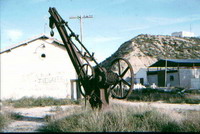 |
| Seron | Little seems to have happened since last year. The artists impression of what it would look like (taken 3 years ago) is now a fading dream. | 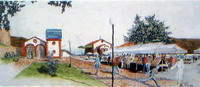 |
| Caniles | Both the station and the sugar factory are gradually crumbling away. | 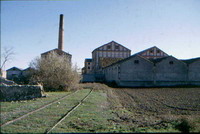 |
| Baza | All the buildings are still there but such a large space in the centre of town surely cannot remain empty for ever? | 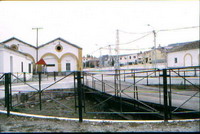 |
Year 2008
Page 20 The Civil War It would seem that the albufera area near Adra was used to execute people.
Page 82 1929 to the end In the book "Ferroviarios de la linea Lorca a Baza y Águilas" (Railway workers of the GSSR) the testimony of Jesus Torres Cillar states that at the end of the twenties the English tried to close the line but were stopped by the unions and the workers. I have seen no other report of this but it wouldn't surprise me.
Page 46 The concessions An article in "The Country Gentleman" dated Apr 24 1886 refers to the setting up of the GSSR. The share capital and shares issued agree with that which I knew but several other comments give new points. It says that 10,000 £1 shares may be reserved for issue in Spain, but I have seen no proof that this happened. It refers to "The Government", presumably of Spain, which has granted £534,000 in six instalments. I think that this refers to the 13,309,114 pesetas which was granted on a per km basis (page 40). The six years was more likely the construction time allocated to the project. It refers to towns on the route granting money towards the project. I have only come across Lorca as having done so but it does seem possible. The final paragraph speaks of "If there is no revolution" and "that if must be considered". Well, no revolution disturbed the building of the GSSR but one certainly killed it.
Page 142 The Hopper wagons A member of ASAFAL, Francisco Martin Sanchez in an article for the Society has cast doubt on the origin of these. Here is a translation of that article.
Page 188 The first restructuring A short notice in "The Times" dated Nov 15 1894 refers to an agreement in court for the "reconstruction" of the GSSR. It refers to a lordship, presumably the Mr Justice Vaughan Williams who presided over the other legal matters mentioned in the book on page 192. Messrs Buckley QC and Kirby are given as supporting the application, I guess that they were the GSSR's representatives.
Page 146 et al Directors On Page 146 and some other pages, Micklem is miss-spelt Micklam. For more on him go to the Micklem page.
Page 13 Hannibal On a visit to Malta I came across a suburb of Rabat called Ghar Barca. Ghar means cave so this was Barca's Cave. When I found out that Punic remains had been found here I realised that the location had been named after Hannibal's Father Hamilcar Barca.
Front cover; Engine at Águilas The driver of the engine "Aguilas" that was taken from the station to a plinth at Águilas port was Miguel Lozano Costa. This is his account of the journey.
"When steam finished, it was decided to make a monument to the railway. I was the only person at the time who could drive the diesel shunter so I was given the job of taking it to the plaza Isaac Peral. For the occasion I was given a new suit and cap. I had to make two journeys because when I got there, the plinth was only long enough for just the engine. So I had to take it back to the workshops, get them to remove the tender, then take it back to the port again. The route from the station passed in front of the old Capri cinema to the Paseo Parril. Here, the line went along the front to the port. At the time, there were many branch lines about the port. However, they were in poor condition and I first had to check with the diesel that the one which led to the plinth was capable of bearing the weight of the engine. Before I could do even this, a gang of 15 - 20 workers from Ways and Works had to go along, the track, replacing screws and repairing the line. A small ramp had been constructed and I pushed the engine into place. I recall that a broken cylinder had been repaired in the workshops but the engine was never used again."
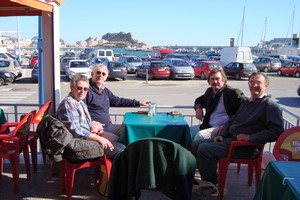
Page 131 Águilas Although I have not been up there, I understand that the castle is now open. In November this year I had the pleasure of meeting Carla Jacqueline Sorel and Gerrit Visser who look after the British Cemetary in Águilas. This is to be found half-way round the town by-pass. It is not easy to spot and will in any case be locked so if you want to see inside contact Jacqueline on SORVIS at telefonica dot net (at=@ dot=.). They have written several articles about the people interred there. These can also be obtained from Jacqueline, price 5 euros each, proceeds to the cemetary fund.
Year 2009
Page 178 The Cortina Agreement This agreement was promulgated in 1917. I am indebted to Jacqueline and Gerrit, see above, for permission to reproduce the following from their British Cemetery articles.
"This agreement fundamentally regulated the sale of iron, pyrite, lead, tungsten and all other minerals from Spain to Great Britain without limitation of quantity and without export duties. In exchange Great Britain would deliver to Spain 150,000 tons of coal per month and different quantities of tin, ferromanganese, ammonium sulphate, machinery, manufactured products, jute and cannabis (I think this means hemp!). The agreement also regulated the use of Spanish vessels for transport, possible use of those vessels by the British and the balancing of the [financial] charge between the two countries."
Page 76 Debenture payments I was completely wrong in the book to say that 1913 was the last year in which debenture payments were made. A considerable number were paid in the 1920s, see some newly discovered archives that were missing when I wrote the book.
Page XII Gillman's House The house shown on this page did indeed belong to a Gillman but not Gustavo, it was his daughter. Again, my thanks to Jaqueline for the correction.
"Elena Gillman, daughter of Gustavo Gillman, married to Louis Lowenthal who was an employee of GSSR. Mr. Lowenthal died in 1949. The house was built in the 1960s and Mrs. Elena Lowenthal lived there for many years. In the 1980s she went to live with her twin sister Maria in Madrid. After Elena died in 1992 the house in Aguilas was sold."
Page 146 Directors and Chairmen I have discovered two archives which give the GSSR's prospectus. Apart from some interesting information on what were the plans for the line, there was extra information on the very early directors and Board Chairmen. To see more detail, go to the archive page mentioned above.
Page 147 Company Secretaries A F Judd in fact served until 1926.
Page 98 The Baza to Guadix line As I said in my book, the line from Baza to Guadix was intended to be part of the GSSR, but this was abandoned after the 1894 restructuring (Page 188). Some work was done before this happened, however, particularly with regard to bridges and track levelling. The work was eventually completed by the Granada Railway Company but not for another 13 years. Partly because of the limited connection with the GSSR and partly because of the distance from Mojacar, I only gave this section a cursory look. This year, because I was staying near Almeria, I decided to look a bit harder and found some interesting relics.
I have constructed a new page The Baza to Granada line
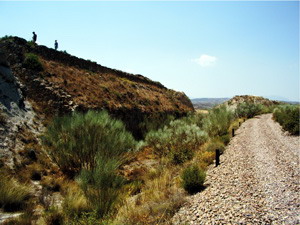
The tunnel between Cantoria and Almanzora I don't know how I missed this little tunnel of about 90 metres. It is easily found on the Almanzora road just outside Cantoria. Look for the rusty viewpoint on the top of the tunnel.
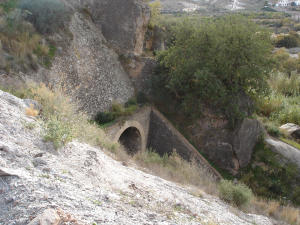
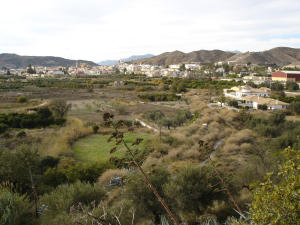
The Cantoria side of the tunnel. In the second picture you can see the buildings of Cantoria station at the top left and the line of the track curving down towards the tunnel.
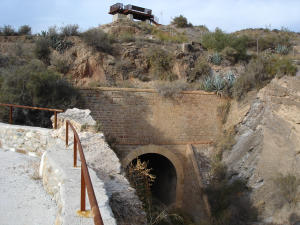
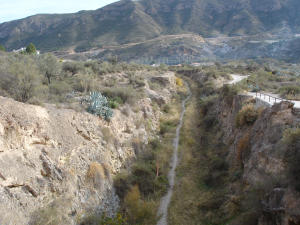
The Almanzora side of the tunnel. Above the tunnel is the rusting viewpoint. Away from the tunnel the trackway curves to the left.
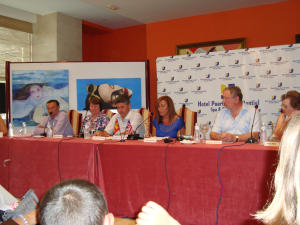
Antonio's new book Antonio's new book "Aguilas and the English" was launched in August at the Hotel San Juan, Aguilas. At the launch table were, from left to right, Myself, Alison Matheson (descendent of George Boag), Antonio Moreno (author of the book), Clara Valverde (Aguilas Council), Juan Gillman (descendent of Gustave Gillman) and Julia Hett (descendent of Edmund Hett).
Update on Stations December 2009
| STATION | CONDITION | PICTURE |
| Seron | The long awaited work on the station area has started with the construction of a via verde. | 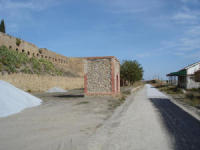 |
| Tijola | I think that this is the remains of the water supply found by Forbes and mentioned on Page 71 of the book. | 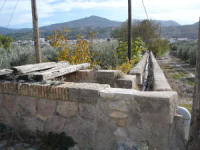 |
| Purchena |   I had expected to turn up here and find a pile of rubble. Instead it has been completely rebuilt and turned into a smart restaurant. This year ASAFAL had their annual dinner there. I had expected to turn up here and find a pile of rubble. Instead it has been completely rebuilt and turned into a smart restaurant. This year ASAFAL had their annual dinner there. | 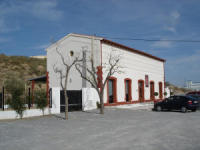 |
| Zurgena | Vandals have smashed open the weighbridge hut but have not (yet) damaged the mechanism. |  |
| Almajalejo | I thought that when this station was demolished, they were going to build a house there. Instead the old station area has been turned into an attractive park and gardens. There is even a little toy train! |  |
| Huercal-Overa | 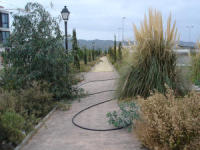 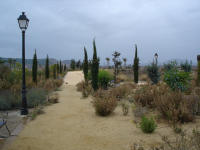 The workshop project seems to have folded, like that at Zurgena. The whole area has got tatty, including the short via verde and garden away from the station. The workshop project seems to have folded, like that at Zurgena. The whole area has got tatty, including the short via verde and garden away from the station. | 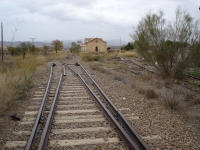 |
| Las Norias | 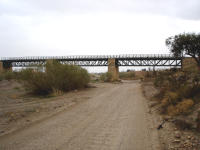 I knew that the station at Las Norias had been demolished some time back but had not gone there because of the difficulty of access. However, this time I did and the picture on the right shows the deserted area where it used to be. As a consolation, nearby we found a magnificent bridge that we had not seen before. I knew that the station at Las Norias had been demolished some time back but had not gone there because of the difficulty of access. However, this time I did and the picture on the right shows the deserted area where it used to be. As a consolation, nearby we found a magnificent bridge that we had not seen before. | 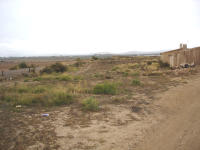 |
Year 2010
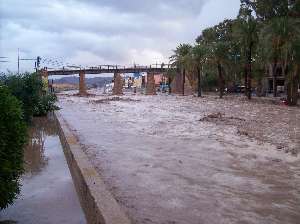
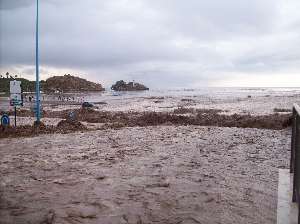
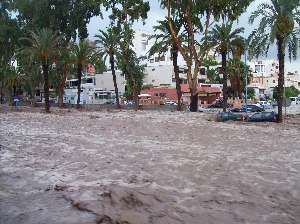
Page 63 Bridge leading to El Hornillo The bridge leading to El Hornillo from the Station crossed the Rambla de los Culebras (Road of the Snakes). Normally this is part of the Aguilas bypass but in August 2010 a devastating flood swept down the street. My thanks to Antonio for the pictures.
In November we took part in an ASAFAL visit to the construction site of the High speed rail line from Murcia to Almeria. The visit is shown as a pdf© file at the following link.Visit to the AVE
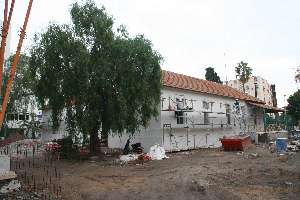
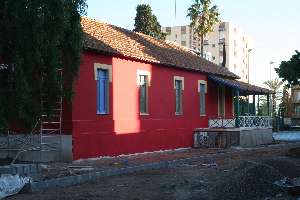
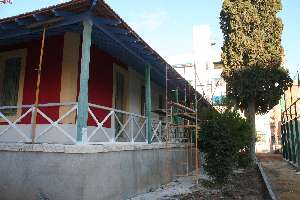
Page VIII Boag's House George L Boag's house is being turned into a sports centre. This is the progress so far. My thanks to Gerrit for the pictures.
It was very interesting to me to see the conversion of George Boag's house. My mother stayed in the house on several occasions when on extended visits to her uncle as did my grandmother, great-aunt and aunt. Also it was home to my other great-aunt, Eleanor, during the early years of her marriage to George - AM (see Boag Page)
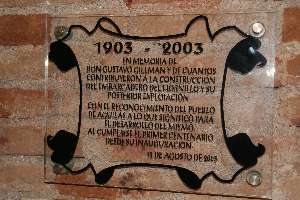
Page VIII Gillman The centenary of Gustave Gillman's work has been celebrated by a wall plaque. My thanks to Gerrit for the picture. The plaque says "1903-2003. In memory of Don Gustavo Gillman and of those who contributed to the construction of the El Hornillo embarcadero and its subsequent operation. With this plaque, the town of Aguilas recognises this work on the first centenary of its inauguration.
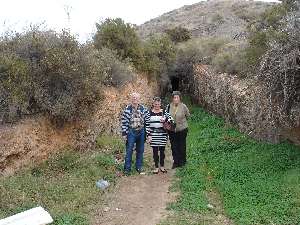
Page 20 The Civil War Behind the station at Aguilas is the entrance to the worker's air raid shelter. Here are Gerrit, Jaqueline and Faith in front of the entrance.
Year 2011
The missing Plate
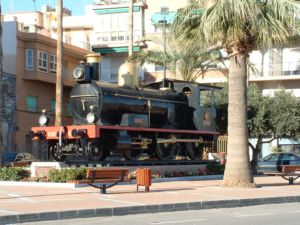
Cover The engine in the Isaac Peral Square in Aguilas does not have the correct plates. This is the Story of what happened to them.
Page 135 The Shunter engine No 100
Beaurocrats never change!
In my book, I give the history of engine No 100, MERCER, which was bought by Hett, Mayler to assist in the building of the GSSR. After the line was opened, it remained with the company until 1916 (the George Boag pages show it in use) when it was sold to Andalucian Railways. I have just come across this little tale, published in El Boletín in June 1917.
We tell of a sad story; sad because it is typical of many things in our country. It is known that all of the railways in Spain, due to the suspension of coastal shipping (this was during WW1 DG), congestion at the frontier etc, have encountered great difficulties in the movement of material. Because of this, the railway companies have agreed to share transport over their networks. As part of this agreement, Shunter engine No 100 was sold to the Andalucian Railways, as the GSSR had no further use for it.
It was to be hoped that the government not only would approve of this way of relieving congestion, but would facilitate the transfer.
Vain Hope! The companies had not reckoned on our wise governors. After four months of document transfer and a mountain of paperwork, approval was finally given but with a Machiavellian twist on payment of the corresponding fees
It was useless to point out that although the engine had been imported free of customs duty (something agreed for much of the stuff brought in for the construction of the GSSR DG), the Andalucian Railway enjoyed the same privileges and still had the right to do so. Pointless to protest that the engine was 30 years old and would otherwise be sold for scrap. All arguments were dismissed and a demand made for 11,000 pesetas customs duty, not for the date of entry into Spain, but at todays duties. Not based on todays condition of the engine, but the condition in which it arrived brand new and with all the bits that came with it.
We leave this sad tale of engine No 100 and the gentlemen who with one hand produce Royal Orders to improve the movement of material and with the other, obstruct such movement.
Update on stations April 2011 by Bob Barby
| STATION | CONDITION | PICTURE |
| Guadix | This station on the main line is refurbished. The junction on to the Granada Railway is still intact and some track was noted to be still in some way towards Baza.The steam engine was locked away in the shed in the fork where the two lines divided so I did not see it. |  |
| Baza | All the building, turntable and shed are as in your book. The track bed appears to be used as a car park on market days. | 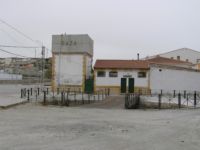 |
| Hijate | Visible from the main road Intact but derelict. | |
| Seron | Similar state to Hijate. | |
| Tijola | Station, water towers etc still in reasonable condition. The RENFE locomotive is still here some hundred yards up the track towards Caniles Surprisingly it is in reasonable external condition (photo attached). Still retains original RENFE number (11339) and later one (303.139). Named Tijola twice! Its was built MTM Barcelona works number 116 of 1964. Could not find anyone to ask further details of possible disposal. | 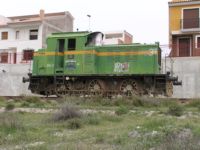 |
| Purchena | Smart restaurant. closes on Tuesday so was not able to sample its wares. The platform is a patio advertised as "El Anden Cocktail (The Cocktail Platform)". | |
| Fines-Olula | Station still intact but derelict. Crane and water column extant. The "Via Verde" starts just past the overbridge west of the station and goes quite a way. Phase one was opened in June 2008 and has had marble statuettes added in 2009. Phase two (nearest the station) was opened in June 2010. | 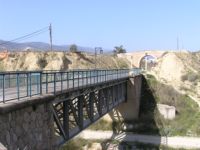 |
| Huercal-Overa | Station derelict.Some track still extant but very overgrown. Small park area has four "sections" each with a railway artefact at the centre. | 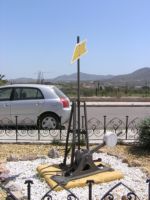 |
| Aguilas | Visited museum but could not find plate for 130.2124.The station has been refurbished as original.The bus station is built alongside but does not detract from the station. The works opposite is said to be still operating but on a limited basis. There was a rake of bogie vans and hopper wagons on a track alongside. DMU 592.135/068/136 arrived at 11.35 with the morning service from Murcia. Still only three services each way a day away back in 1986 when I first visited. The Murcia services are some of the last to be 592 worked. 130.2124 still on its plinth in good condition. |
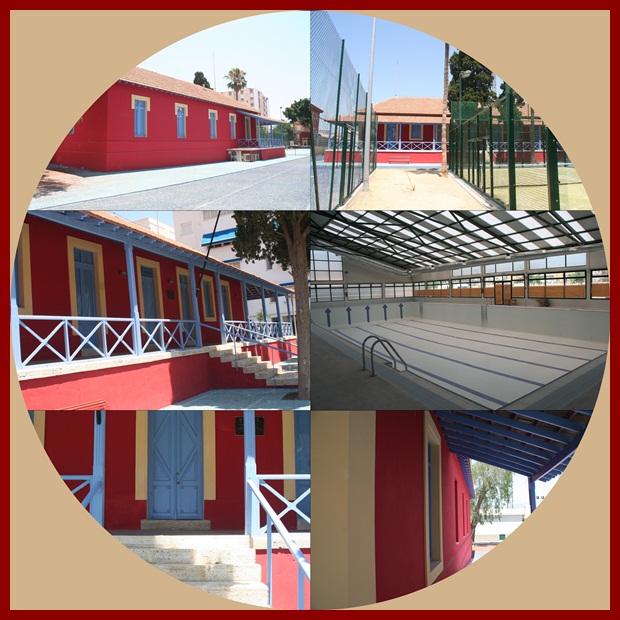
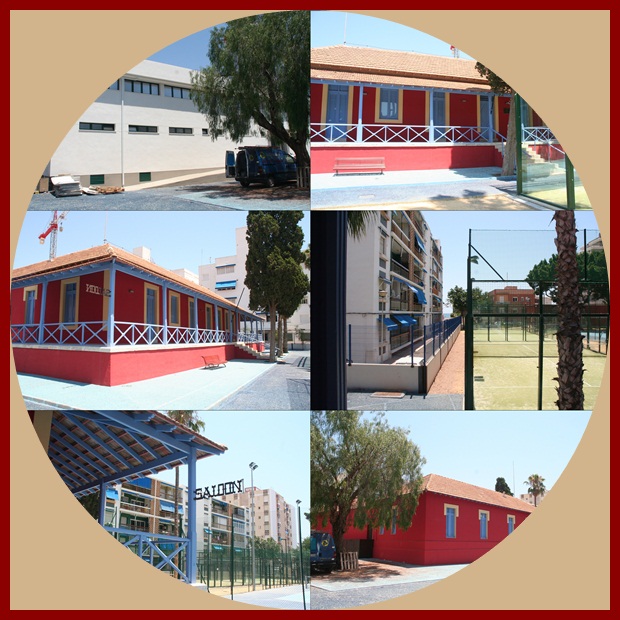
Work on George Boag's house and the surrounding area continues. My thanks to Gerrit for the latest pictures.
Year 2012
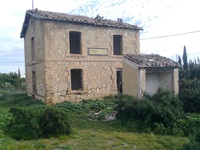
Page 114 - Arboleas. My thanks to Paul Gough for this picture and update on Arboleas Station.
The visit was on a fine clear day and access to the building remains unchanged. The site appears more overgrown. Although now in poor condition, the building is not beyond saving.The building remains largely the same as shown on 114. However, there is evidence of vandalism: exterior security doors have been forced and the interior is in poor condition with ceilings down and damage to walls. The roof is in poor condition and the exterior wall facings are deteriorating. Some walls on the lean-to building have collapsed. A small building adjacent to the station building has been damaged and is in poor condition.Some signs of the platform remain and the over bridge is in good condition.
Page 112 - Fines-Olula in 2012.
Two people have sent me pictures of the current state of Fines-Olula Station. The first was Bob Barby and these are shown below. Note the new Via Verde.
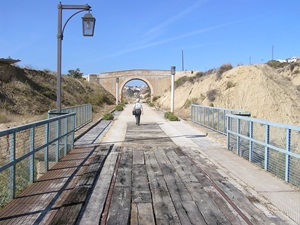
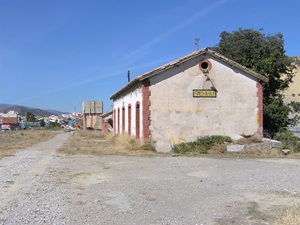
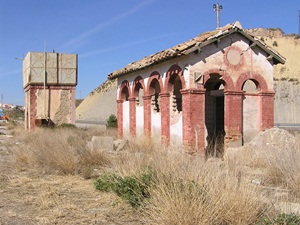
The second set is by Paul Gough and include his report
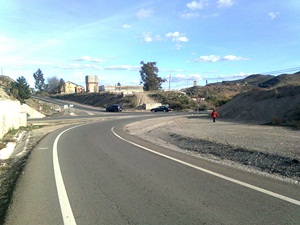
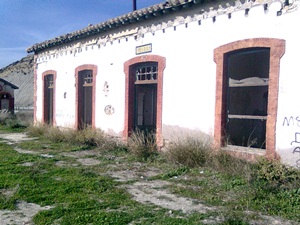
Buildings. Although suffering from graffiti, their condition has remained surprisingly good. Some false ceilings have collapsed in the station building and there is evidence of fires, vandalism to door and window frames, etc. The toilet block has suffered some vandalism.
Permanent way. The embankment on the approach to the station, from Olula, has been breached by a new road. However, past the overbridge in the direction of Fines the track bed has been redeveloped into a Via Verde path and service road, featuring trees and seats.
Equipment. The iron girder bridge (leaving the station toward Fines) has been restored as part of the promenade area.
The brick and stone road overbridge still shows evidence of locomotive exhaust smoke.
The water pipe, crane and weighbridge remain undisturbed. The water pipe was made in Alacant. Siding buffers are in good condition. The weighbridge and scales remain and, despite signs of an effort to break into the scale cabinet, the mechanism is intact.
On the embankment, to the town side of the new road junction, a tourist information office has been constructed and a little way along the embankment, a marble cutting machine is displayed.
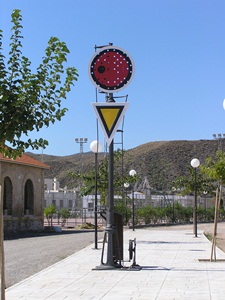
Page 114 - Albox in 2012. Pictures by Bob Barby.
George Boag's house completed
In December this year we visited, with Gerrit and Jacqueline,the completed conversion of George Boag's house. The area at the front has been converted into padel (a sort of tennis) courts. Inside, there is a corridor with various GSSR pictures and at the end a huge picture of George himself. To the left is a cafe with some rather tasteless pictures of naked nymphs. At the end, left and right, are rooms which may be used by students for conferences,study and meetings. Overall they seem to have done a good job
The same cannot be said of the swimming pool at the back. It is supposed to be heated by solar power. However there is not enough heat in the sun in winter to heat the water, so the pool is closed. When we peered through the window, the pool was half full of greenish water. It was not looking good.
©Copyright Don Gaunt
Click here to go to the Faydon.com Home Page